Chicken Dash – Test First, Then Play with Purpose 🐥
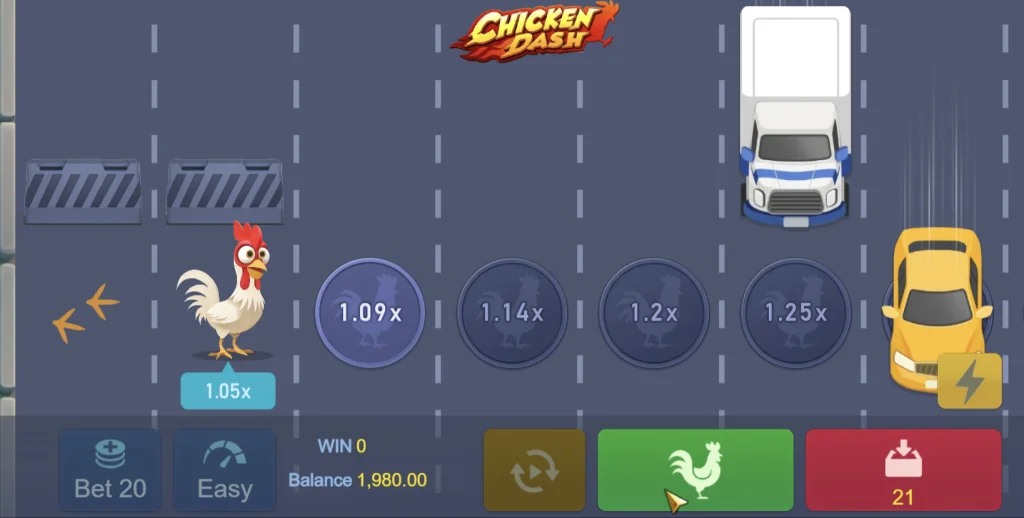
Chicken Dash is the arcade-crash gambling game people talk about when they want short, tense rounds that reward clear thinking. A tiny bird. A traffic-strip road. You choose when to step forward and when to bank the payout. Each safe tile nudges the multiplier up, so every click carries weight. That blend of simplicity and pressure has pushed the Chicken Dash game into the spotlight at casinos. Newcomers like it because the rules land fast. Regulars come back because the decisions stay interesting across dozens of rounds. Throw in a free demo on this very page, mobile browser play, and a transparent math model, and you get a modern crash title that respects time and bankroll discipline in equal measure.
What Chicken Dash Is and Why Players Stick Around ✨
| Feature | Details | Player Benefits |
|---|---|---|
| Provider | TaDa Gaming | Known studio with modern crash design and stable builds |
| Release date | 14 Oct 2025 | Latest math model and optimisation for current devices |
| RTP | 97% | Fair return profile for a crash title – sensible long-run base |
| House edge | 3% | Clear frame for expectations when planning sessions |
| Volatility | Low to High by level | Choose Easy, Normal, or Hard to match risk appetite |
| Max multiplier | Up to 20,659x | Real high-end potential for lucky deep runs |
| Max win | Up to £2,065,910 | Transparent top line when staking at higher limits |
| Min bet | £1 | Low entry point for careful testing with real money |
| Game type | Crash-style, arcade road theme | Push-your-luck loop with quick feedback and simple controls |
| Betting time | About 6 seconds | Fast rounds, less waiting, more decisions per session |
| Auto bet | Yes | Optional automation for stake placement between rounds |
| Multiple bets | No | One focus at a time – fewer distractions and misclicks |
| Bet history | Not stored | Encourages simple manual tracking for sharper decisions |
| Provably fair | Yes | Integrity can be checked – transparency builds trust |
| Leaderboard | No | Solo focus – no pressure to chase social rankings |
| Chat room | No | Cleaner interface for decision-only play |
| Mobile compatible | Yes – browser play | No app to install, instant access on phone or tablet |
| Free demo | Available on this page | Risk-free practice to build thresholds before staking |
| Game duration | Variable by decisions | You set pace and session length through thresholds |
At heart, the Chicken Dash gambling game is a push-your-luck loop built for clean choices. You tap to move the chicken across a grid of road tiles. Safe tiles increase the multiplier. Dangerous tiles end the round. You can cash out at any time to claim whatever multiplier you have secured so far.

Where to Play Chicken Dash & What to Check Before You Deposit 🔍
Finding a good home for the Chicken Dash casino experience starts with licensing and responsible-play tools. Look for a UKGC licence or other respected oversight, deposit limits, loss limits, clear T&Cs, and banking you trust. Product quality is next. You want the recent release build, the correct RTP, and a working free demo so you can test before you stake. Mobile support should be a given, and load times should feel snappy on ordinary 4G or home Wi-Fi.
We have already done the due diligence. This page features a recommended venue where you can try the Chicken Dash game for free first, then move to real money only when you have a plan. That removes the guesswork around fairness and usability. If you are comparing other sites, tick off this mini-checklist: licence visible in the footer, cashier with familiar brands, quick KYC, and a direct launch to the demo without forced registration. If a site stumbles on any one of those items, skip it. There are plenty of better options.

How to Play Chicken Dash Step by Step 🎯
Think of every round as a small project with a start, a midpoint decision, and a finish. You will play better once your routine is automatic.
1. Pick a Sensible Stake
Choose a bet size that represents about 1 percent of your session bankroll. You want headroom for 50 to 100 rounds, because longer samples teach faster.
2. Select Your Difficulty
Easy for long testing and steady multipliers, Normal for a middle road, Hard if you prefer strong early growth with sharper danger. Commit to one level for the session to reduce second-guessing.
3. Start the Round
Tap to move one tile forward. Watch the multiplier update. Feel the pace. The betting time is short, so have your threshold in mind before you start.
4. Track Safe Progress
With each safe tile the multiplier climbs. Note how quickly you approach your cash out line at your chosen level. On Hard the curve ramps earlier, so be ready.
5. React to Modifiers
If a boost tile appears and launches you two or three spaces forward, re-check your threshold. Many players bank right after a lucky push to lock a tidy win with low extra exposure.
6. Decide to Cash Out
This is the core decision. Cashing out secures the current multiplier. Continuing opens the door to a bigger win and a sudden bust. Use thresholds to avoid hesitation.
7. Resolve the Outcome
A safe tile continues the run. A losing tile ends it immediately. If you reach the finish line, collect any Bonus Bags that may appear.
8. Review and Reset
Log level, final multiplier, and whether you followed the plan. Keeping a short paper note works well since bet history is not saved in game.
Session tip: Set a personal rule like this – first win of the session cash out at 2.0x, then allow one controlled push per three rounds if you are ahead. It keeps the rhythm calm and prevents reactionary chasing after a tough loss.
RTP, Levels, and Multiplier – Read The Math Before You Sprint 📈
Chicken Dash lists a 97 percent RTP with a 3 percent house edge. Volatility shifts with your difficulty pick. Easy gives you more steps, lower risk, and smaller top multipliers. Normal sits between the two poles. Hard cuts steps, sharpens early growth, and carries the steepest danger curve. The global cap reaches up to 20,659x, which frames the upper boundary of what is possible in the math model. Treat that as a ceiling rather than a target.
Below is a practical table that maps each level to typical settings, along with an estimated lost chance figure and a short note on who benefits most. Use it as a guide for choosing the right difficulty for your temperament and bankroll.
| Level | Steps | Risk | Min/Max Multiplier | Lost Chance | Suited For |
|---|---|---|---|---|---|
| 🟢 Easy | 28 | Low | x1.01 – x14.54 | ≈ 20% | New players, careful bankrolls, long learning sessions |
| 🟡 Normal | 24 | Moderate | x1.05 – x43.15 | ≈ 35% | Balanced play, small pushes after a base win |
| 🔴 Hard | 20 | High | x1.21 – up to x20,659 | ≈ 60% | Risk takers, short sprints with strict limits |
Closing tip on levels: if you plan to play 100 or more rounds to refine thresholds, Easy and Normal are friendlier. Use Hard for brief, planned bursts with micro stakes and a firm 2.0x cash out line.
Standout Features That Shape Real Sessions 🧩
1) Three Difficulty Tracks for True Control
Difficulty is not window dressing here. Steps, curve shape, and risk profile change with each track. That lets you tune your session to your goals – long samples and learning on Easy, mixed pace on Normal, sharp spikes on Hard. New players can build confidence on Easy while tracking cash out habits. Veterans can use Hard for short, focused sprints where early growth is steeper and mistakes cost more.
2) Boost Tiles That Compress Risk
A two or three tile safe launch is rare enough to feel special and common enough to affect strategy. Many players use boosts as a green light to secure a near-target cash out rather than gambling the fresh tail of a run. Treat boosts as variance on your side – a small window where you convert momentum into a locked result. If you were already close to your threshold, bank it.
3) Bonus Bags as a Finisher’s Dividend
Reaching the end of the track can trigger bonus prizes. It is not your core expected value – the multiplier is still the main engine – but it adds a second reward layer that makes clean finishes memorable. Think of it as a small dividend for disciplined play. If you plan routes that regularly reach the end on Easy or Normal, these extras add up over a longer session.
4) Provably Fair Transparency
Round integrity can be verified, which matters in crash formats where a single step decides the result. Being able to check fairness supports trust and makes the game more approachable for first-timers. It also helps regulars stick to plans because confidence in the math reduces second-guessing after a cold patch.
5) Fast Betting Window That Keeps You Honest
With roughly six seconds to place a bet and get moving, indecision gets punished. The pace is a feature. It encourages pre-commitment and stops overthinking from clogging the loop. Set your threshold before the countdown. When the round starts, execute the plan rather than negotiating with yourself mid-run.
6) Browser-First Design on Mobile and Desktop
No app to install, no storage to manage. You always play the current build straight in your browser. This reduces friction for quick sessions and makes it easy to test the demo whenever you like. Add the page to your home screen for one-tap access and consistent performance on 4G or Wi-Fi.
Try the Chicken Dash Demo First – Free Practice Beats Guesswork 🕹️
Demo play is the fastest way to understand how Chicken Dash works without risking your bankroll. The loop feels deceptively light until you encounter your first near-miss at a planned threshold. Practising on the demo builds that cash out reflex without pressure. It also helps you feel the difference between Easy, Normal, and Hard before real money enters the picture.
The demo sits at the top of this page for that exact reason. Use it to map a basic plan – for example, cash out at 1.8x on Easy and 2.2x on Normal – then carry that structure into your first funded session. Run at least 30 demo rounds per level so your thresholds feel natural when the stakes are live.
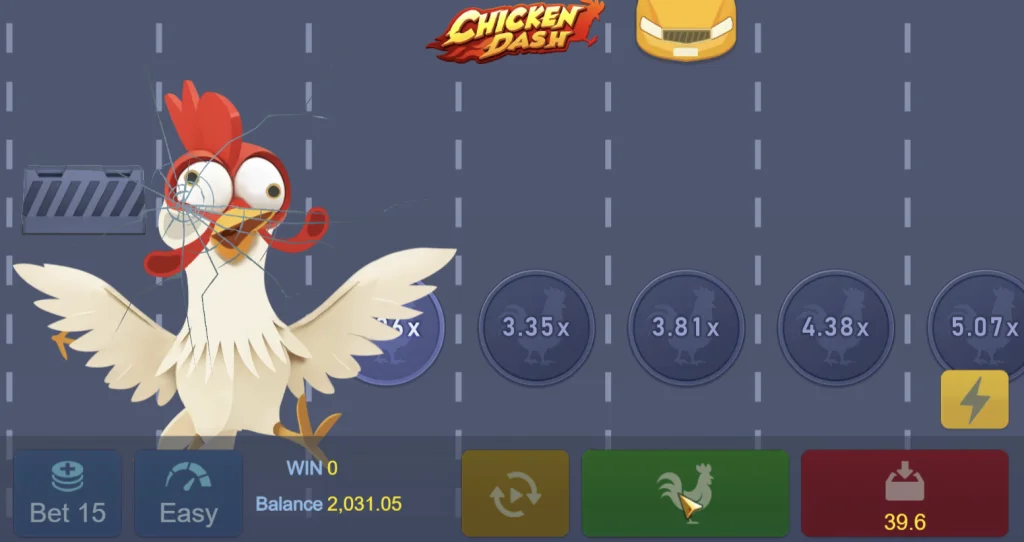
Pros And Cons – The Real-World Feel After 100 Rounds ⚖️
Before you jump in, it helps to know how the game behaves when the novelty wears off. Here is the honest balance sheet, based on what matters during actual sessions, not brochure talk.
Pros 🌟
- 💡 Fast entry and a clear loop that rewards discipline
- ✅ 97 percent RTP with provably fair checks you can verify
- 🎚️ Three difficulty tracks to match mood and bankroll
- 🎁 Boost tiles and Bonus Bags add lift without rules bloat
- 📱 Instant browser play on mobile and desktop, no app needed
- 🧪 Free demo on top for risk-free practice and threshold mapping
- 💷 Low £1 entry to test live rounds safely
- 🔄 Optional auto bet for steady pacing between rounds
- 🚀 Smooth performance on standard 4G or Wi-Fi
- 📊 Transparent math model and stated ceilings that aid learning
- ⏱️ Short rounds that respect time and keep focus tight
- 🎯 Simple UI that centres decisions, not fluff
Cons 🧩
- ⚠️ Push-your-luck tension can trigger tilt if thresholds are ignored
- 🔥 Hard mode punishes indecision quickly – keep stakes small
- 👥 No chat room or leaderboard if you want social play
- 🎲 One run at a time – no multiple simultaneous bets
- 📝 No built-in bet history – bring a tiny notebook or sheet
- 🎮 Few side modes – lean experience by design
Practical Strategies That Win More Sessions Than They Lose 🧭
These tips are not secret formulas. They are frameworks that reduce variance spikes and help you survive the inevitable cold patches. Pick one, log 50 to 100 rounds, then decide whether to keep or switch. Consistency is the edge here.
1) Fixed Threshold Cash Out
Choose a number in advance and honour it. Examples – 1.8x on Easy, 2.2x on Normal. This turns mid-run hesitation into a simple yes or no. The result is steadier outcomes and less emotional fatigue. Adjust the number only between sessions, not during one.
2) Two-Step Ladder With a Reset
Cycle A: cash out at 1.6x to build a base. Cycle B: push to 2.4x on the next round. If B fails, the cushion from A softens the hit. Keep bet size flat and reset the cycle after any loss. This structure gives you mild aggression without runaway risk.
3) Micro-Stake Hard Mode
Use Hard for its early growth curve while keeping risk tiny. Stake half a unit per round and cash out at 2.0x. Limit yourself to short sprints – for example, 20 attempts per session – then return to Easy or Normal for data gathering. Treat Hard as a bonus track, not your main grind.
4) Cool-Off After Any Plan Violation
If you chase beyond your threshold or tilt after a bust, start a three-minute timer and step away. Cooling off protects the part of your bankroll that would otherwise disappear into frustration plays. A short break resets breathing and restores discipline.
5) Boost Discipline Rule
Treat a two or three tile boost as a signal to bank if you are near your line. The safe jump is not permission to gamble deeper. It is the sign that variance just favoured you – take the win. Write this rule at the top of your notes so you follow it under pressure.
6) Bankroll as 100 Units
Divide the total session bankroll into 100 units. Risk 1 unit per round on Easy or Normal and 0.5 on Hard. This standardises risk and lets you survive the cold streaks that always appear in crash formats. If you drop 10 units, pause and review. Do not double stakes to chase.
7) Notebook for Real Feedback
Since the game does not keep bet history, make a tiny log. Record level, target threshold, and actual cash out. Ten lines per page is enough. Patterns emerge quickly – especially around the urge to over-press after a near miss. After 100 entries you will know your best level and threshold window.
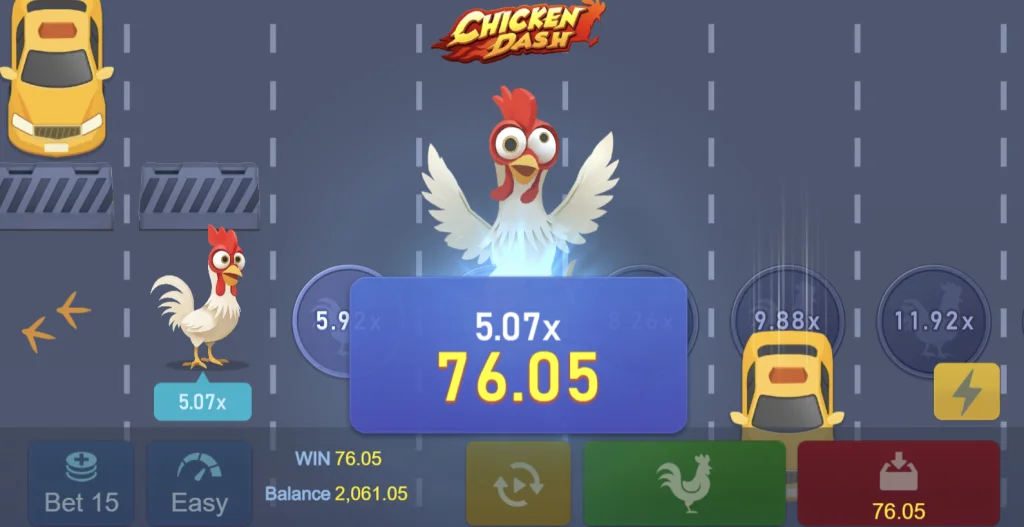
Why Chicken Dash Deserves a Spot in Your Rotation ✅
Chicken Dash cuts straight to the good part. Clear rules. Quick rounds. Real choices that you feel on every tap. You get a 97 percent RTP, provably fair verification, and modifiers that add lift without bloating the loop. The result is a crash title that respects your time and rewards discipline.
Five quick reasons it earns a place:
- Decisions are front and center, not hidden behind menus or fluff
- 97 percent RTP with transparent fairness you can check
- Three difficulty tracks that match how you like to play
- Boost tiles and Bonus Bags add momentum and finish-line lift
- Browser play on mobile and desktop with no app required
If you want quick, disciplined sessions with real agency, the Chicken Dash game is a yes. Demo first, lock your thresholds, and play your plan. That is how Chicken Dash stays entertaining and fair while giving skilled players room to shine.
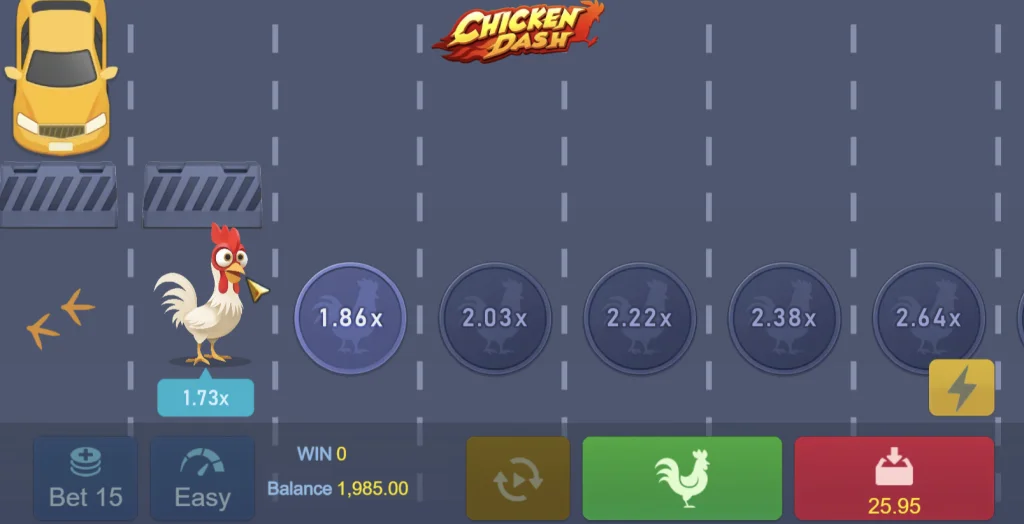
Keep it fun and stay in control. Luck can swing, your budget should not. Set a clear limit before you start, use only disposable funds, take breaks when emotions rise, and walk away on schedule.
Email: [email protected]